
𰂐N S𰁐A𰅧𰀨𰂄 𰅐𰁠 𰆆𰂂𰁉 𰀦AN𰄤I𰀖𰀅𰄓 𰂅𰄲𰆅𰁆𰅦N𰁉T
I recently finished reading Joshua Gooch's Capitalism Hates You: Marxism and the New Horror Film, where the author looks at contemporary horror movies and argues that monsters work like mirrors. They reflect whatever sociopolitical anxiety is boiling underneath—economic precarity, environmental collapse, the feeling that the whole system wants you dead. The index itself works as a roadmap to how fictional horror captures and presents to us the horrors of capitalism.
- Work Hates You: Antiwork Horror and Value Theory
- Love Hates You: Feminist Anticapitalist Horror and Social Reproduction Theory
- Nature Hates You: Psychedelic Eco-horror and Ecological Marxism
- The Neighborhood Hates You: New Black Horror and Uneven Development
- Commodities Hate You: Mass- Culture Horror and Commodity Forms
- The Family Hates You: Elevated Horror and Family Abolition
- Feelings Hate You: Therapeutic Horror and Emotion Work
What hit me, tho, was how often the monster, as a narrative figure, embodies a symptom. Something bubbling up from below.
Lately, I see that logic everywhere—especially in how we talk/write about the internet. You've probably heard of the Dead Internet Theory, which claims that since around 2016 most online activity has been led by non-human entities such as bots. Of course, such a theory gained force after 2020, when the most recent AI boom made it feel more accurate than ever. No humans left, just automated noise.
Jason Koebler thinks that take is way too clean, especially when addressing the current state of Facebook. The ever‑growing AI‑slop. Bizarre bot interactions plaguing feeds and groups. Our own data bouncing around long after we logged off. He calls it the Zombie Internet. Facebook, as Koebler puts it, has become a shitshow—you can't tell bots from humans, fake from real. And the tech company won't try to stop this. Why would it? There's too much money in the chaos.

Koebler doesn't explain why he picked the zombie, but the link is easy to spot. The zombie fits this mess perfectly precisely because it refuses to die. It was human once, then something—a virus, a curse, a bite— stripped its personhood away. Now it shuffles forward, blank‑eyed, hungry for ours. That's exactly how the Shrimp Jesus side of Facebook feels. Bots that used to be accounts. Feeds that used to be communities. Something that looks familiar but isn't, and it wants to pull us into the same hollow state.
The problem is that both versions—dead or undead—leave us in the same place. Run. Hide. Log off. Is that really all there is? Or is there a different kind of monster that might send us toward imagining a different internet?
Spoiler: I think there is.
From Monsters To Cannibals
Let's look at a monster whose origin is just as hateful, invented to dehumanize and justify violence. But this one got flipped: t h e c a n n i b a l. I've run into this figure again and again in my PhD research. Every time, it opened a door to a different way of thinking with and through technology (including the internet ofc). However, to understand how this works, we need to go back to the cannibal's origin story.
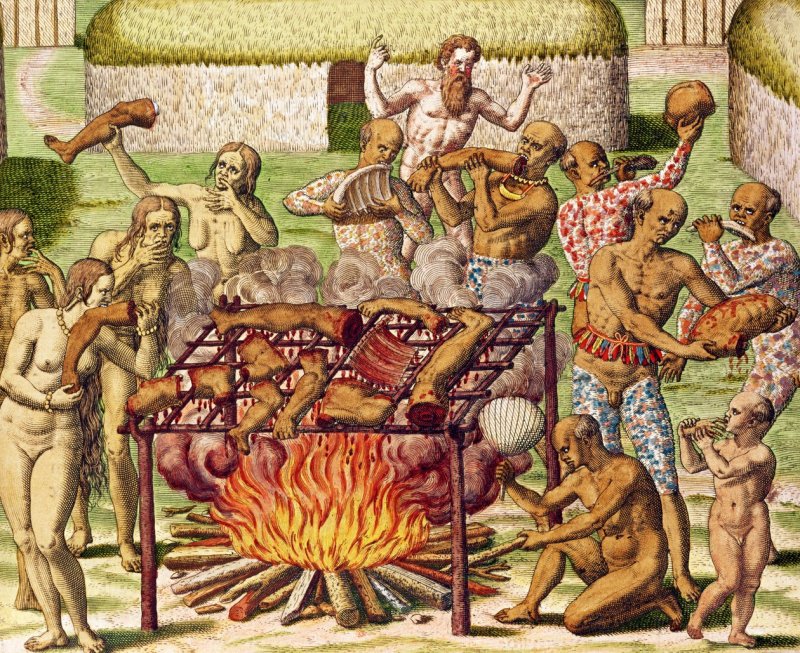
Spanish conquistadors took the demonym Carib (the Indigenous peoples of the Caribbean, more accurately the Kalinago) and twisted it into caníbal—the word for a man‑eating savage. That single transformation strategically turned a group of people into monsters. The conquistadors knew what they were doing. They picked the most shocking violence they could imagine because it was easy to paint, easy to print, easy to spread. The shock value did the work. Rage-bait, 16th‑century style. Sounds familiar?
This is the very reason why Gooch, in the conclusion of his book, warns against using the word cannibalize (and related concepts). "The term originates in the racist colonial imaginary," he writes, "and cultural critics shouldn't adopt it." He's not wrong, the word was indeed a weapon… but weapons can be seized.
Consider Caliban, Shakespeare's enslaved character whose very name derives from cannibal. In The Tempest (1610-1611), Caliban refuses to obey his colonizer, Prospero. Prospero imposes his language and the name Caliban onto the man he has enslaved and robbed, yet Caliban doesn't just take it. He famously strikes with: "You taught me language, and my profit on't / Is, I know how to curse." Caliban fights back, curses, refuses to play the obedient servant. Still, don't be mistaken, in Shakespeare's original telling, Caliban is very much the stereotypical savage. A monster who must be tamed and controlled.
That's the colonial weight Gooch wants us to avoid reproducing. But he backs off too soon—especially because there's a long tradition of claiming Caliban. In Aimé Césaire's A Tempest (1969), Caliban becomes the main character, a decolonial force who demands a new identity: "Call me X. That would be best." This X does not long for a pre‑colonial past; he demands total reinvention on his own terms. Then there's the Cuban writer Roberto Fernández Retamar, who traced all the ways Caliban had been reclaimed—in feminist theory, in protest slogans, in revolutionary writings. He asked a much bigger question about the Latin American postcolonial condition: "What is our history, what is our culture, if not the history, the culture of Caliban?" His point was simple: we don't need to find some pre-colonial fantasy; we need to demystify the monster. From Césaire's reclamation to Retamar's reframing to postcolonial readings of Caliban's curses as empowerment, artists and thinkers have refused to let the word remain a weapon of the oppressor. Avoiding the word leaves it in his hands. Artists, revolutionaries, and many others have spent centuries proving otherwise.
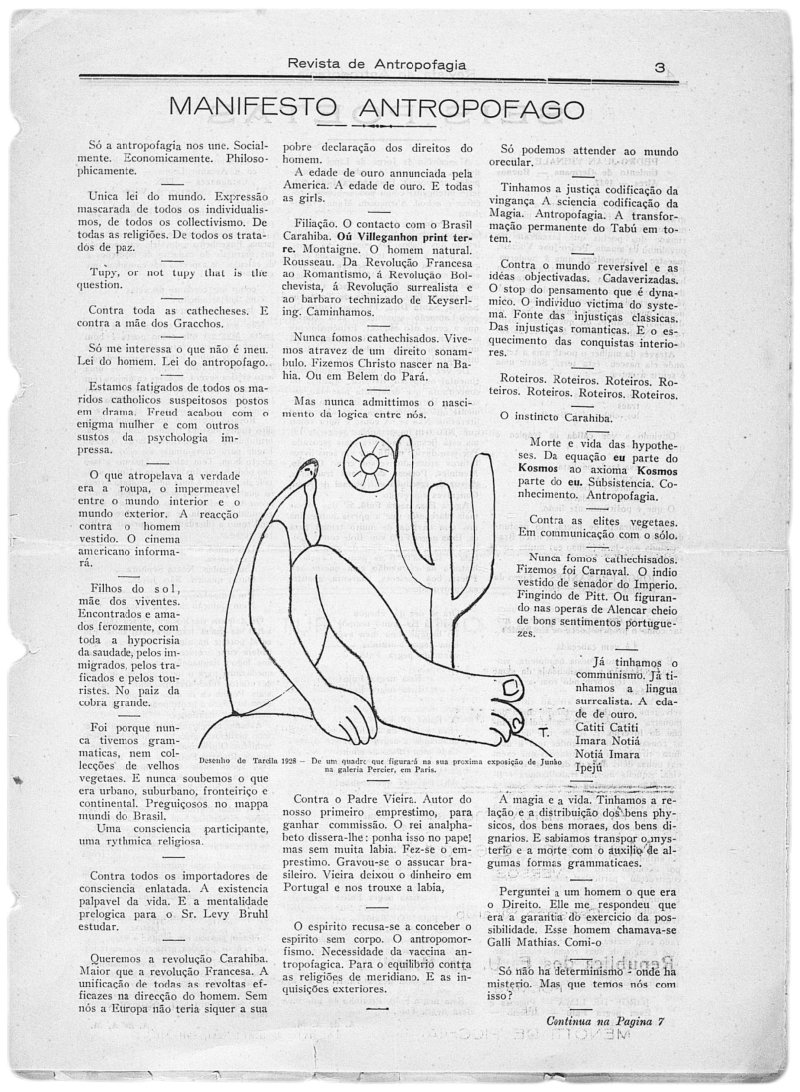
That tradition of reclaiming Caliban wasn't just a literary or political exercise—it also became an artistic method. Decades before Césaire and Retamar, in 1928, the Brazilian poet Oswald de Andrade had already taken the cannibal in a different direction. His Cannibalist Manifesto called for the "absorption of the sacred enemy." Ingest colonial value systems. Metabolize them. Assert artistic agency from within. As Andrade put it: "Cannibalism alone unites us. Socially. Economically. Philosophically."
What these proposals share is the way they reappropriate the figure and turn it from a monster into a method. One that embraces contradiction and refuses to be neutralized by the impending doom of destruction.
Which raises a question: if this reversal worked against colonial narratives in art and theory, could it also work against the colonial logic baked into the internet? To answer that, we need to understand what we're actually up against. Today, the colonial legacy from which the cannibal emerged has metastasized into the core of technocapitalism, with the internet as one of its main agents. On the surface, its soft power runs on data mining, hyperpersonalized algorithms, and platform monopolies—echoing the active destruction of ways of knowing. Yet, underneath, its material life depends on labor precarity, displacement, rare earth mining, underpaid workers, and the toxic leftovers of planned obsolescence. The internet's protocols encode a colonial rationale of control and thrive by making themselves feel inescapable.
Tracing the Cannibal Internet
Remember the zombie from earlier? That monster offered only a diagnosis; the cannibal, by contrast, may offer a way through. So here's a proposal: what about tracing a Cannibal Internet? Not a new category that needs to be inaugurated, just a name for practices already at work. A way of following the tradition of the reappropriated monster reclaiming its own agency. An ephemeral rupture where artists, thinkers, (hack)activists have deliberately pierced through the internet's protocols, rewired its platforms, ingested their infrastructures.
These practices are often dismissed as unsuccessful, badly made, or worse, merely resilient. Now, in reality tho, what they manage to do is to create a zone of disturbance, a space where modernization, extraction, and technocapitalism come under pressure from Other ways of knowing. As Mariana Botey writes, a zone of disturbance isn't about representation but about disruption, opacity, and sovereign poetics. It’s a space where history gets disoriented, and new formations emerge through practices that refuse to play by the rules of progress—and refuse to be measured by its values, like scalability or permanence.
I know, that sounds abstract, but this zone of disturbance isn't a fantasy, it's already here (and there). The Cannibal Internet names a mode of counteruse already at work, a hidden genealogy composed by self‑organized peer‑to‑peer networks like the mesh networks in Catalonia or Detroit created to bypass commercial infrastructure entirely; the early Hic et Nunc NFT platform which was built and run by its community (until its founder pulled the plug); the Zapatistas’ use of the internet in the 1990s to escape state media and broadcast their communiqués directly to the world, etc.
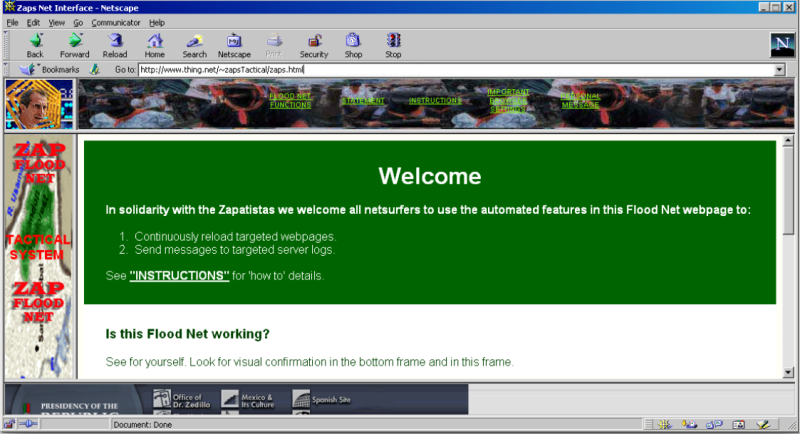
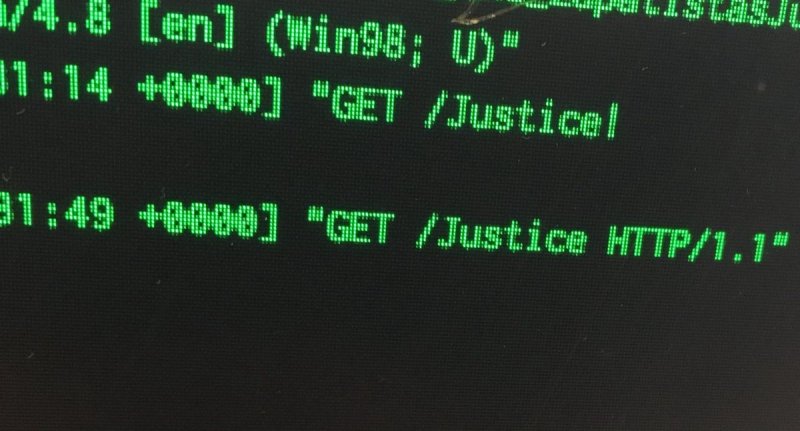
Take FloodNet (1998), a net art piece and a tactical poetics tool developed by the Electronic Disturbance Theater 1.0 via a Java applet. You loaded the page, and your browser would keep reloading a target website. You could also leave a protest message. When the server got overloaded and crashed, your message appeared instead of the usual 404 Not Found error. The collective called for a virtual sit-in in solidarity with the Zapatistas and Las Abejas, a pacifist community of Zapatista sympathizers. On December 22, 1997, 45 members of Las Abejas were massacred by a paramilitary group during a prayer meeting in the village of Acteal, Chiapas. On June 10, 1998, over 8,000 people joined the first action, hammering the Mexican government's site with 600,000 hits per minute. The point was to clog the pipes. To force acknowledgement. And, perhaps against all odds, it worked.
Later that year, they turned FloodNet on the Pentagon and the Frankfurt Stock Exchange. The Pentagon fought back with its own Java applet, trapping protesters in an empty loop. But EDT declared victory anyway. Their goal, as Brett Stalbaum put it in an interview with Wired, was "to help the people of Chiapas keep receiving the international recognition they need to stay alive."
Political action and art-as-veil fuse into one cannibal gesture: using the web's own infrastructure—requests, packets, error messages—against its gatekeepers.
That's the kind of route I'm arguing for. One that avoids both nostalgia for the old web and mindless acceptance of the new.
Now, let me be clear about what this route is not. The Cannibal Internet is not a metaphor for doom scrolling or getting eaten by algorithms. It's the opposite. It's about taking the colonial infrastructure of the internet and doing what Césaire, Retamar, Andrade, and many others did—ingesting it, turning it into something else.
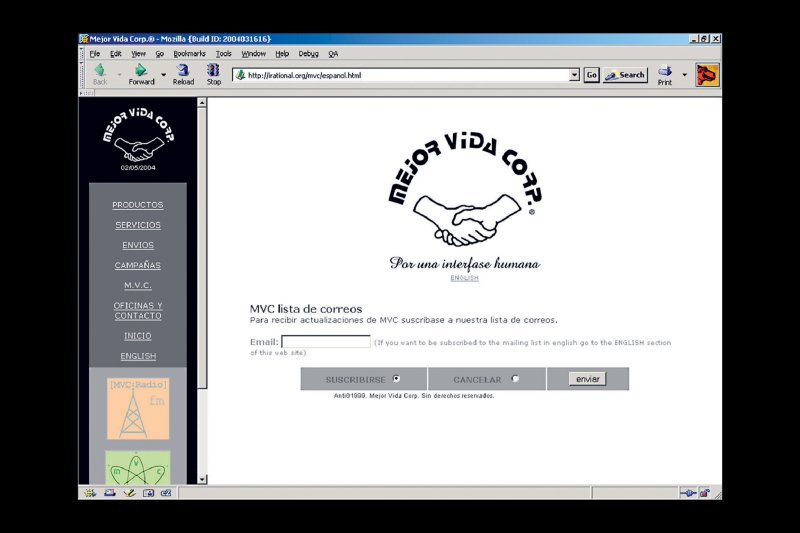
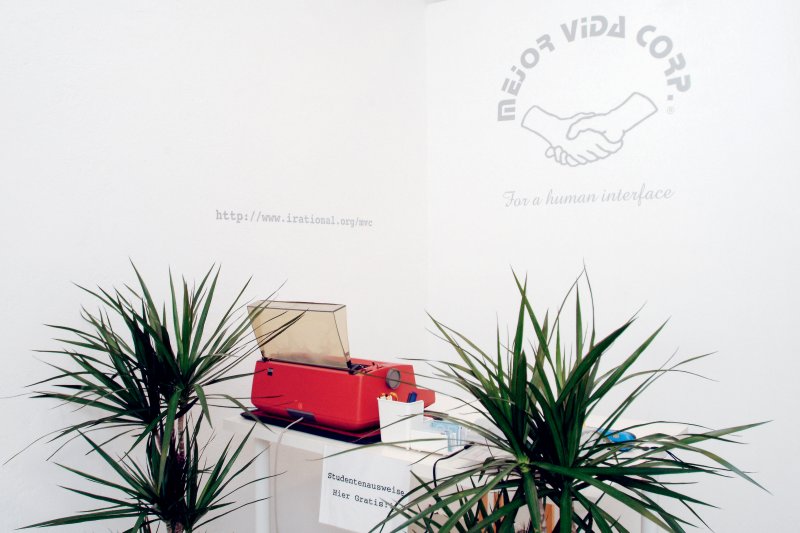
Minerva Cuevas's Mejor Vida Corp (1997–ongoing) is another perfect example. This non-profit corporation creates and distributes free products and services across contexts: subway tickets, safety pills, printable barcode stickers that lower supermarket prices, self-stamped envelopes, fake student ID cards that grant museum and travel discounts internationally. Everything is user‑reproducible. Cuevas uses the web to coordinate exchanges, bypass censorship, and spread these counter‑tools across borders. She hacks point‑of‑sale databases, identity checks, pricing algorithms. Here, the artist weaponizes the web and turns it into the distribution infrastructure for ingesting corporations, transforming it into free services, and letting users replicate the means of sabotage. Cuevas does not dismantle these systems; rather, she turns its own logistics into tools for everyone else.
The Cannibal Internet swallows the corporate machine's divisions—between technology and culture, labor and art, us and them. Digests them. Ephemerally turns them into something that works for you, not against you. Now, this doesn't magically erase power imbalances; it makes them visible. It doesn't pretend we're all equal, it insists that making is already a form of thinking, and that the shape-shifting field of art is a fertile ground where Other technics act from within, yet against, the infrastructures that oppress them.
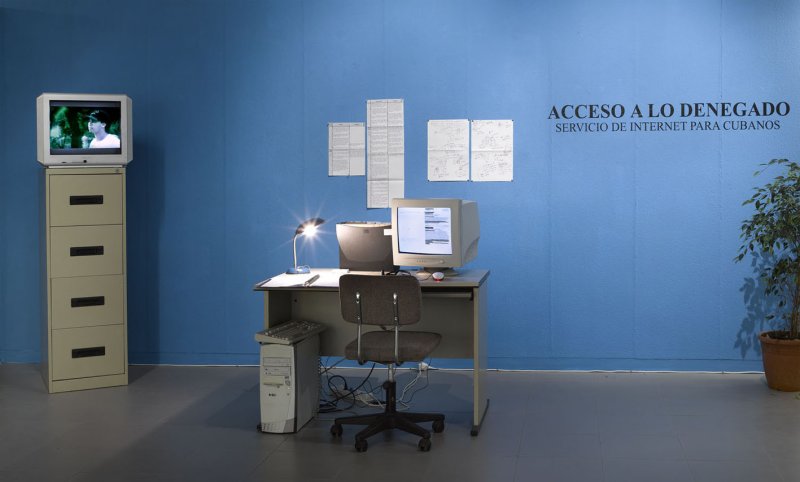
A different kind of ingestion happens when the artist exploits legal loopholes rather than corporate logistics. Such is the case of Núria Güell's Acceso a lo Denegado (2012–2016). She found a Cuban law that gave internet access to foreign residents but not to Cuban nationals—state telecom companies were forbidden from offering service to citizens. As a Spanish national, she exploited the loophole and brought the internet into Cuban homes. No money changed hands. They got outside information. She got insider knowledge. She'd sit with each family, watching how they navigated shortages, bureaucracy, black markets. They taught her which officials could be bribed, which back roads to take, how to stretch a dollar until it screamed. The result? A decalogue of strategies. A multi‑subjective portrait of Cuban life.
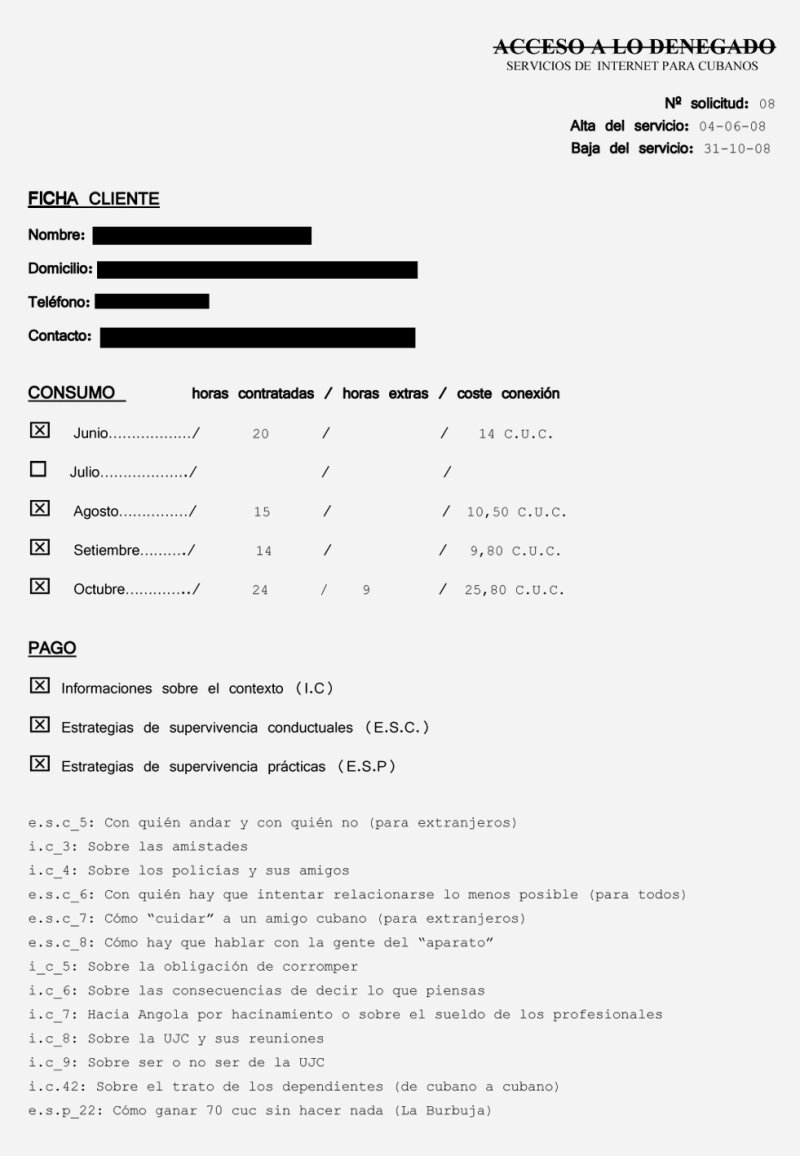
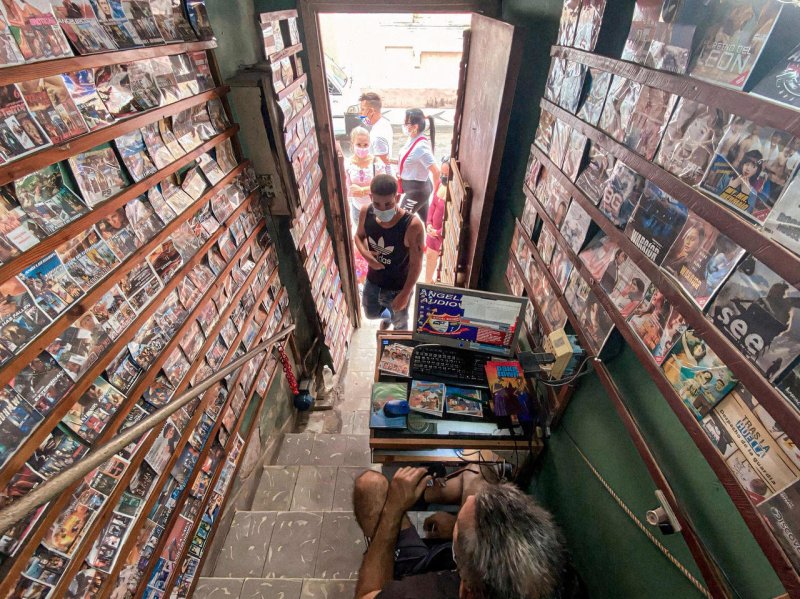
Her project eats the state's legal apparatus from the inside. What’s important is that the system can't immediately dissolve it (which made it, momentarily, uncontainable). This kind of cannibalism doesn't ignore power imbalances; it works with them (asymmetrical privileges and all). That's what puts Güell in dialogue with local efforts already on the same terrain. Like the Cuban SNET, a grassroots offline network for sharing data and strategies, and El Paquete Semanal, a one‑terabyte collection of digital media (films, TV series, software, advertisements) distributed weekly on the underground market as a substitute for broadband internet, have long operated through a similar logic, working around state‑controlled infrastructures.
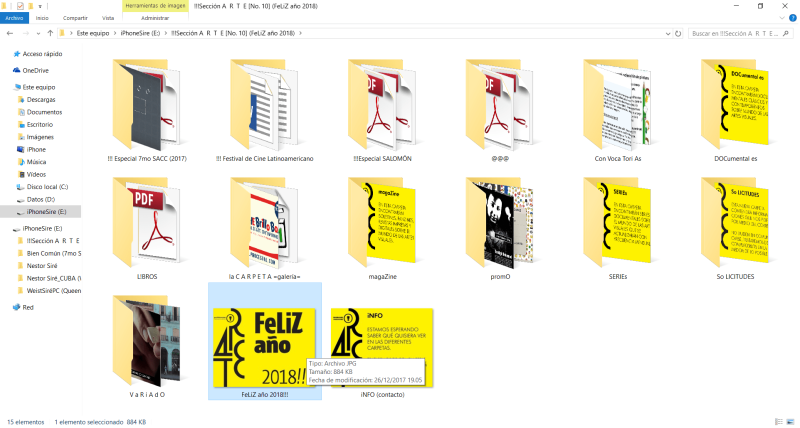
Inside El Paquete, artist Nestor Siré runs !!!Sección ARTE (2015–current), an offline curatorial project. Every month, he compiles a folder of contemporary art files—video works, net art, software-based pieces—and slips it into the weekly distribution. The folder follows El Paquete's rules: no larger than 5GB, no pornography, no overtly political content. Once it's in the package, the art moves the same way everything else does. A hard drive passed between hands. A USB stick slipped into a pocket. A distributor making copies for their neighborhood. Siré has been doing this since 2015, reaching an estimated 10 million people across Cuba who might not otherwise see contemporary digital art. The work can be edited, modified, reconfigured. No login. No paywall. No server to shut down.
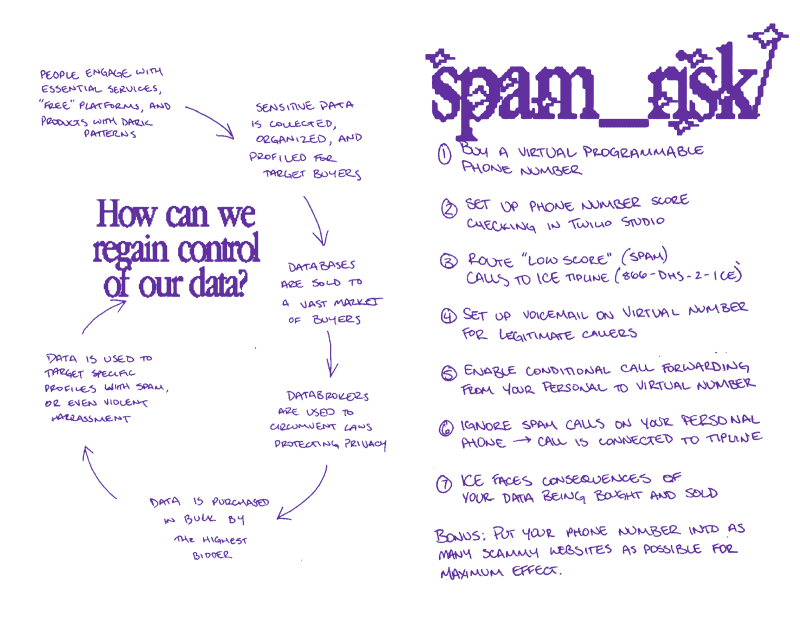
Don't be fooled into thinking this is all ancient (in internet years) history. While this modest genealogy carries examples that might seem distant time-wise, the insistence on cannibalizing the web is very much alive and well. Look at 13 Scores Against Tech Fascism, an online exhibition hosted at Error 417 Expectation Failed. The exhibition collects 13 instructional scores from artists around the world. V-Ball by kunsf.xyz tells you how to turn tennis balls into protest devices. Annika Santhanam’s spam_risk/ shows you how to spam the ICE hotline. A recipe book for counterstrategies to technofascism beautifully put together by gabe nascimento, Nunca mais: antifa recipes. And yes, instructions for building mesh networks courtesy of Signals Rising’s Meshtastic and alternative tech infrastructures. The whole exhibition is an embodiment of the Cannibal Internet in its totality. Unstable, poetic, subversive. A dispatch from the front lines.
The overthrow of the internet in its most vicious form can never be fully accomplished. But neither can its total victory. The Cannibal Internet is persistent, adaptive, shapeshifting—always too late to pin down. That's the point. This isn't a story of winners and losers. It's about the continuous emergence of Other systems, Other ways of doing, Other imaginaries. Whether the Cannibal Internet has won or ever will win is impossible to determine, and maybe irrelevant. What matters is that it persists and keeps mutating, cracking open the technocapitalist infrastructure just enough to open a zone of disturbance.
El que ríe al último, ríe mejor.
References
- Andrade, Oswald de. “Manifesto antropófago.” Revista de Antropofagia 1, no. 1 (May 1928): 3–7.
- Botey, Mariana. Zonas de Disturbio: Espectros del México Indígena en la Modernidad. Mexico City: Siglo XXI, 2014.
- Césaire, Aimé. A Tempest: Based on Shakespeare's The Tempest: Adaptation for a Black Theatre. London: Oberon, 2000.
- Fernández Retamar, Roberto. Todo Caliban. San Juan, PR: Ediciones Callejón, 2003.
- Shakespeare, William. The Tempest. Edited by Peter Hulme and William Sherman. New York: W. W. Norton & Company, 2004.